Beach Flip Flops and Starfish Design Review
As I set up my table for the upcoming weekend craft fair, I am surrounded by stacks of finished goods: embroidered tote bags, aprons, tea towels, patches, caps, small pouches, pillow covers, and a variety of giftable handmade items. My goal is always to curate a display that stops shoppers in their tracks. Today, I am putting the Beach Flip Flops and Starfish embroidery design under the microscope. Before I commit to a batch production run, I need to determine if this digital file translates into a profitable craft fair product or if it will just gather dust on the shelf.
First Impressions: A Subtle Touch of Summer Charm
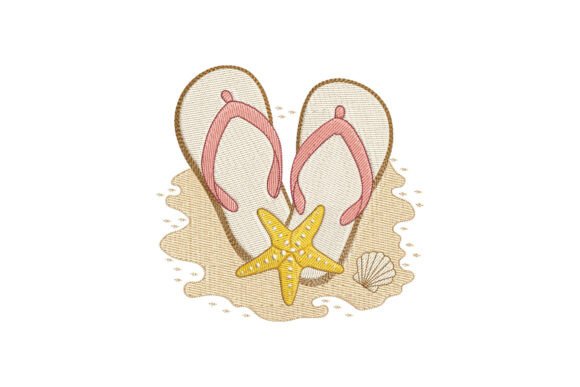
When I first loaded the Beach Flip Flops and Starfish machine embroidery design into my software, the immediate vibe was undeniably cute and relaxed. It does not scream "bold statement piece" like some modern graphic tees do. Instead, it feels soft, decorative, and nostalgic. The description promises a "subtle touch of charm," and after reviewing the vector lines, I agree. This is not a heavy, dense motif meant to cover an entire garment. It is a delicate accent that works best when given room to breathe. For a boutique maker or Etsy seller looking to add a seasonal pop without overwhelming the customer, this design hits the sweet spot between whimsical and wearable.
The aesthetic leans heavily into the classic summer vibe. It evokes memories of sandy toes and ocean breezes. However, because it is subtle, the success of the final finished product relies entirely on execution. If the thread colors are dull or the fabric texture fights with the stitch definition, the charm gets lost. In a crowded market booth, subtlety can be a double-edged sword; it must look premium enough to justify a price tag but distinct enough to catch the eye from three feet away.
Product Versatility: Where Does It Shine?
One of the biggest selling points for any embroidery file is versatility. I tested how Beach Flip Flops and Starfish performs across different substrates in my mind's eye before stitching a single sample. Here is where I see the most potential for sales:
- Tote Bag Design: This is likely the strongest application. Placing the motif on the lower corner of a canvas tote bag creates a balanced look. It suggests a beach day without being cheesy. Shoppers love carrying reusable bags that hint at their lifestyle, and this design fits perfectly as a tote bag design.
- Tea Towel Embroidery: Kitchen linens are a staple for handmade shops. A linen or cotton blend towel with this motif stitched near the hem would sell well as a hostess gift or a summer home decor item. The key here is ensuring the stitch density isn't too high, which could make the towel stiff.
- Apron Embroidery: For the foodie crowd at the fair, a simple bib apron with the flip flops and starfish on the pocket adds a playful touch. It transforms a utilitarian item into a fun, themed accessory.
- Embroidered Patch: Creating this as a detachable patch opens up new revenue streams. Customers can buy them to sew onto denim jackets, backpacks, or hats later. Patches are excellent low-cost impulse buys at a booth.
- Pillow Covers and Caps: While possible, these require more caution. On a cap, the curved surface might distort the shape of the starfish if the hoop size is not perfect. On a pillow cover, the design should be large enough to be seen but not so large that it looks out of proportion.
Practical Production and Selling Points
From a business owner's perspective, efficiency is everything. Can I produce fifty units of this handmade product without spending hours troubleshooting? The answer appears to be yes, provided I stick to the right fabrics. The design seems easy to understand at a glance, which is crucial for online listings. When creating a printable mockup for my Etsy shop, the clean lines of the flip flops and the organic shape of the starfish photograph beautifully. They do not get muddy even in smaller thumbnails.
However, there are practical considerations for batch production. Because the design is described as adding a "subtle touch," it functions better as an accent than a massive focal point. If I try to scale it down too much for a small label, the details of the starfish legs might disappear. Conversely, if I scale it up too large for a T-shirt chest area, it might look sparse unless paired with other elements. For a small shop product, consistency is key. I plan to use the same thread colors across all my samples to maintain brand consistency, perhaps using a sandy beige for the flip flops and a coral pink or seafoam green for the starfish.
Design Challenges and Careful-Use Notes
Even the best digital embroidery file has limitations. As I prepare my materials, I am noting several areas where Beach Flip Flops and Starfish requires careful handling:
- Fabric Texture: Thick or highly textured towels can sometimes swallow fine stitches. If the loops of the terry cloth are too deep, the thin lines of the flip flop straps might not stand out. I will test this on scrap fabric first.
- Stitch Density: The starfish may have dense areas depending on the fill style. Too much density on a stretchy fabric like jersey (for T-shirts) can cause puckering. I must ensure I use the correct stabilizer to support the fabric during stitching.
- Dark Fabrics: While this design is great on light summer fabrics, using it on dark navy or black requires a backing layer or a specific thread choice to ensure visibility. The "subtle" nature might vanish against a dark background.
- Curved Surfaces: As mentioned, caps are tricky. The hoop needs to be positioned perfectly to avoid distorting the roundness of the flip flops.
Maximizing Visual Appeal and Booth Strength
In a physical booth, lighting and presentation make or break a sale. The Beach Flip Flops and Starfish design affects visual appeal by suggesting a mood. When displayed on a white tote bag next to a stack of seashells, it instantly communicates "vacation." This emotional connection drives buyer engagement. Customers aren't just buying a bag; they are buying the feeling of a summer day off.
To maximize this, I will create a dedicated section of my table featuring only beach-themed items. By grouping the embroidered patches, caps, and towels together, I create a stronger visual impact than scattering them around. The design assets here serve as the unifying theme. For the online component, I will take high-resolution photos showing the texture of the thread against the fabric. Close-ups that show the quality of the commercial embroidery work will help justify the price point to online buyers who cannot touch the product.
Designer's Checklist Before Production
Before I start my sewing machine for the full run, I am following a strict checklist to ensure quality control:
- Test on Scrap Fabric: I will stitch a sample on the exact type of canvas and linen I plan to use to check for puckering or thread breaks.
- Check Thread Contrast: I will verify that the chosen thread colors pop against the fabric. If the contrast is too low, the design will look cheap.
- Review Spacing and Hoop Size: I will confirm the hoop size accommodates the design with enough margin for error. Tight spacing can lead to misalignment.
- Inspect Stitch Density: I will look closely at the starfish fill to ensure it is not too tight, which can tear delicate fabrics.
- Create Real Mockups: Digital previews are nice, but a real photo of the finished product sells better. I will hang one sample on my booth wall immediately.
- Confirm Licensing: Finally, as a responsible creator, I will double-check the commercial licensing terms. Even though the description mentions it is for fabric projects, I must ensure I have the right to sell the finished goods at a craft fair or on Etsy.
In conclusion, Beach Flip Flops and Starfish is a solid addition to a summer collection. It offers a charming, versatile option for the Etsy seller or craft fair vendor looking to expand their inventory with minimal risk. By focusing on high-quality fabrics, proper stabilizers, and strategic display, this design has the potential to become a top seller. It captures the essence of the season without trying too hard, making it a timeless choice for the handmade market.