Autism Heart Puzzle: A Designer's Business Review
As an embroidery designer who has spent years refining designs for small business merchandise, I approach every new digital embroidery file with a critical eye. The goal is never just to make something look pretty; it is to ensure the design translates into a durable, professional asset that elevates a brand. Today, I am reviewing the Autism Heart Puzzle, an Inspirational category design that holds significant potential for branded patch use and custom apparel. Whether you run a boutique, manage a creative studio, or sell handmade goods on Etsy, understanding how this specific motif performs in a commercial setting is essential before you commit to production.
First Impressions: Visual Personality and Brand Fit
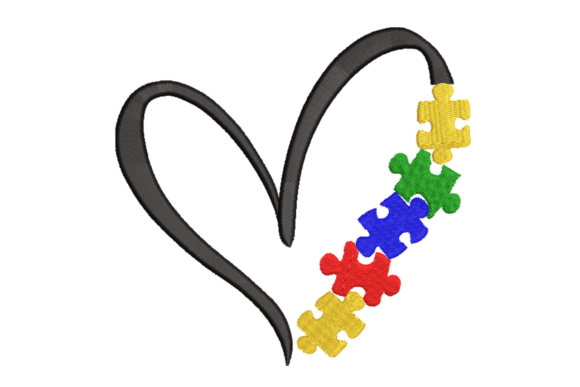
The Autism Heart Puzzle immediately strikes a balance between playful charm and emotional resonance. Visually, the combination of a heart shape with puzzle piece elements creates a recognizable symbol often associated with awareness and support. For a small business owner, this design feels friendly yet professional. It avoids being overly clinical while maintaining enough structure to function as a cohesive logo element. In the realm of Embroidery, where clean lines and distinct shapes are paramount, this design offers a strong silhouette that reads well even from a distance.
When evaluating this as a core component of your brand identity, consider the message you wish to convey. This design is perfect for businesses focused on inclusivity, community support, or family-oriented services. It adds a layer of warmth and purpose to your small business merch. Unlike abstract patterns that might get lost in translation, the Autism Heart Puzzle carries immediate meaning, fostering a connection with customers who value these causes. However, its effectiveness relies heavily on execution; a poorly stitched version can look cluttered, undermining the professionalism you aim to project.
Real-World Application Across Merchandise Categories
Let us examine how the Autism Heart Puzzle performs across various product types commonly used by entrepreneurs and decorators. Its versatility makes it a strong candidate for multiple applications, provided the sizing and placement are managed correctly.
- Embroidered Patches: This is arguably the strongest use case for this design. As an embroidered patch, the Autism Heart Puzzle can be applied to denim jackets, backpacks, or tote bags. The defined edges of the heart and puzzle pieces hold up well under the high stitch density required for patches, creating a premium, finished product that feels substantial.
- Staff Uniforms and Aprons: For cafés, bakeries, or boutiques, placing this design on an apron pocket or chest area serves as a subtle but powerful statement. Apron embroidery needs to withstand frequent washing and friction, so the durability of the design is key. The Autism Heart Puzzle works beautifully here, adding a personal touch to workwear without overwhelming the uniform.
- Cap Embroidery: Translating this to a cap front requires careful attention to scale. The curves of the hat can distort intricate details, but the bold nature of the heart shape helps maintain integrity. It functions well as a left-side accent or a central focal point if sized appropriately.
- Tote Bag Design: On canvas totes, the Autism Heart Puzzle acts as a walking billboard for your values. The texture of canvas pairs excellently with the raised texture of thread, enhancing the tactile quality of the handmade product.
- Product Packaging Accents: Even beyond apparel, this design can be embroidered onto fabric tags or labels attached to gift boxes and packaging, elevating the unboxing experience for your customers.
Critical Considerations for Commercial Production
While the Autism Heart Puzzle is visually appealing, there are specific scenarios where it must be used with caution. As a designer, I always advise clients to test boundaries before mass production. Small patch sizes can be problematic if the puzzle piece details become too dense, causing thread bunching or registration issues. Similarly, on curved surfaces like caps, the puzzle segments may need slight simplification to prevent distortion.
High stitch density is another factor to monitor. If the design is too tight, it can stiffen the fabric, which is undesirable for lightweight shirts or delicate uniforms. Additionally, when working with textured fabrics like fleece or heavy twill, the intricate outlines of the puzzle pieces might get lost. Darker uniforms require careful selection of thread colors to ensure the white or pastel puzzle pieces stand out against the background. Frequent washing is also a reality for items like aprons and staff shirts; the design must be anchored securely to prevent fraying over time.
Impact on Brand Identity and Customer Trust
Integrating the Autism Heart Puzzle into your line of custom apparel does more than just decorate; it communicates values. In today's market, consumers seek brands that align with their beliefs. By featuring this Inspirational design, you signal empathy and community engagement. This builds trust and encourages buyer engagement, particularly among families and individuals connected to the autism community.
However, consistency is vital. Using this design sporadically can dilute its impact. To maximize product value, integrate it into a cohesive collection. Ensure the visual style matches your other design assets. If your brand is modern and minimalist, ensure the embroidery style reflects that—perhaps using fewer thread changes or a cleaner outline. If your brand is rustic and handmade, a slightly more textured stitch pattern might fit better. The goal is to create a seamless visual language that reinforces your brand story.
Practical Designer Notes for Implementation
Before you purchase the machine embroidery design or begin production, follow these practical steps to ensure success:
- Test in Black and White: Always download the embroidery file and preview it in grayscale first. This helps you identify areas where contrast might be low or where stitches might overlap confusingly.
- Verify Scale: Check if the design works at the intended size. Does the Autism Heart Puzzle remain legible at 2 inches? At 4 inches? Avoid shrinking complex designs below their recommended minimum size.
- Review Thread Contrast: Plan your color palette carefully. Ensure the puzzle pieces are distinct from the heart background. High contrast usually yields the most professional look.
- Inspect Spacing and Hoop Size: Confirm that the design fits within your machine's hoop limits. If it is a multi-hoop design, ensure the alignment markers are clear to prevent misalignment during stitching.
- Test on Real Fabric: Never skip the test run. Stitch the design on the actual fabric you plan to use. Different materials react differently to tension and needle penetration.
- Use Proper Stabilizer: Choose a stabilizer appropriate for the fabric weight. A tear-away might suffice for cotton, but a cut-away is often necessary for stretchy knits or heavy-duty patches to prevent puckering.
- Create a Printable Mockup: Generate a printable mockup showing the design on your actual products. This is crucial for client approval and helps visualize the final result before investing in materials.
- Compare with Other Assets: Place the Autism Heart Puzzle next to your existing logos and typography. Does it clash? Does it complement? Consistency drives recognition.
- Confirm Licensing: Finally, verify the commercial licensing terms. Ensure you have the right to use this design for commercial embroidery projects, including selling finished goods. Do not assume free-to-use means free-for-profit.
The Autism Heart Puzzle is a versatile and meaningful addition to any small business portfolio. With thoughtful planning and attention to technical details, it can transform simple garments into powerful statements of support and style. By treating it as a strategic brand asset rather than just a decoration, you ensure that every stitch contributes to the long-term success and reputation of your business.